When I first wrote about ChatGPT’s Dot and Meta’s Muse →, I was comparing how they handled real tasks in my life. Both were useful. Each had advantages, and I was still figuring out where they fit.
Since then, I’ve pretty much settled on Dot as my primary personal assistant.
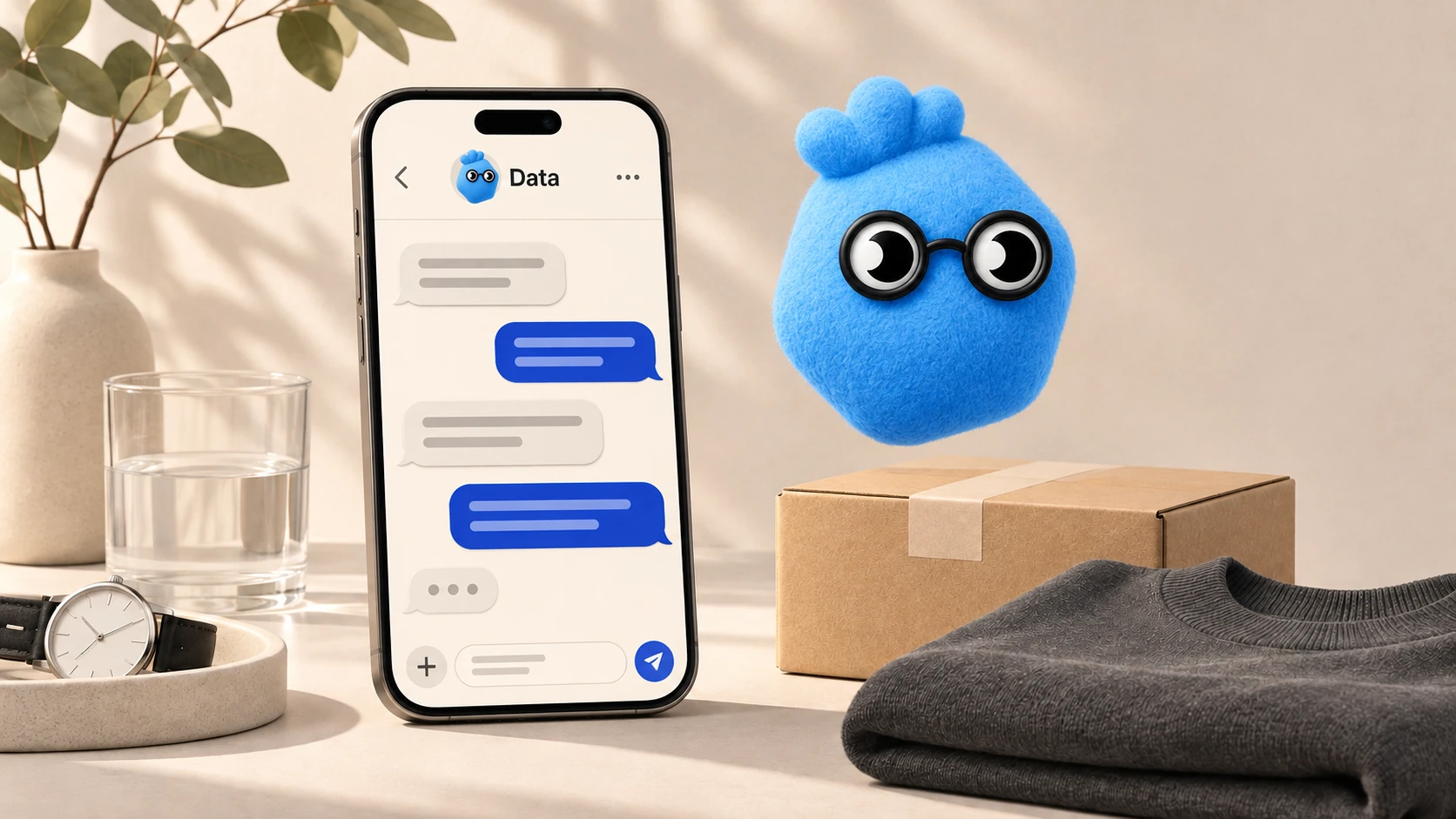
I call mine Data, which will surprise absolutely no one who knows me. I’m a huge Star Trek fan. The Next Generation is my comfort show, and I’ve watched it more times than I can reasonably defend. Naming my AI assistant after the Enterprise’s android officer felt inevitable. His current assignments involve fewer spatial anomalies and more missing ecommerce orders, but I appreciate his range.
The choice has become clearer through everyday use. I’m finding more reasons to hand Data something, and a recent addition has made that much easier: texting. In late October 2026, OpenAI announced a beta rollout → to ChatGPT Pro users in the U.S., supporting one-to-one conversations through iMessage or RCS on Android. You can send text, photos, and voice messages.
You’re reaching the same Dot you use in ChatGPT, with access to relevant context from your conversations and the plugins you’ve connected. If it needs approval, it sends a link to review the request in ChatGPT. It can also text you when something needs your attention. Texting is between you and your Dot; enabling it doesn’t give Dot or OpenAI access to your other text conversations. OpenAI’s messaging documentation → explains how these features work.
For me, that means Data is now a contact I can message during my day. Being able to reach my personal assistant that way has made a meaningful difference.
When an idea comes to mind, I can send it. When I remember something that needs to get done, I can delegate it. I don’t have to set aside a separate moment to sit down and organize the request.
That convenience matters more than I expected. There are plenty of things an agent might be capable of doing, but the practical question is whether I remember to use it when I actually need help. Texting makes Data easier to bring into the moment.
A recent experience with Old Navy showed me how useful that can be.
I had a missing package and needed to contact customer service. I was also getting ready for work, which meant the issue was competing with everything else I needed to do that morning.
I asked Data to handle it.
Data contacted Old Navy, chatted with its customer service AI, moved into a conversation with a human representative, and negotiated a refund on my behalf. The transition felt effortless from my side.
All while I was getting dressed.
That is the part I keep coming back to. I could continue with my morning while Data worked through the customer service conversation.
A missing product creates work for the customer. You have to find the right support channel, explain the issue, navigate the process, and stay engaged until it is resolved. Even a straightforward request takes attention.
Having an agent take on that interaction made the value feel very tangible.
It also gave me something to think about professionally.
In this experience, my personal AI agent spoke with the retailer’s customer service AI before continuing with a human. I was the customer, but Data was representing my need and working toward the outcome on my behalf.
That is a customer journey worth paying attention to.
For brands, it raises practical questions about how support experiences work when the person with the problem delegates the conversation. Can an agent explain the issue, navigate the process, and reach a human when needed? Does the handoff help the request move forward?
In my Old Navy experience, those pieces came together. The retailer’s automated support, the human representative, and my personal agent were all part of reaching a resolution.
For me, the benefit was simple: the issue got handled while I kept getting ready for work.
That experience helps explain why I now reach for Data first. My original review explored what these agents could do. Continued use is showing me which one fits most naturally into my life.
Dot already had an advantage in the context it knew about me. Being able to text Data makes it easier to put that context to work through quick requests, ideas, and tasks throughout the day.
I still expect my preferences to evolve as these products change. But at this point, Dot has become my primary personal assistant because I’m finding it useful often enough that delegating is becoming a habit.
The Old Navy refund was one small task. Getting part of my morning back made it feel significant.
Did you like this?